

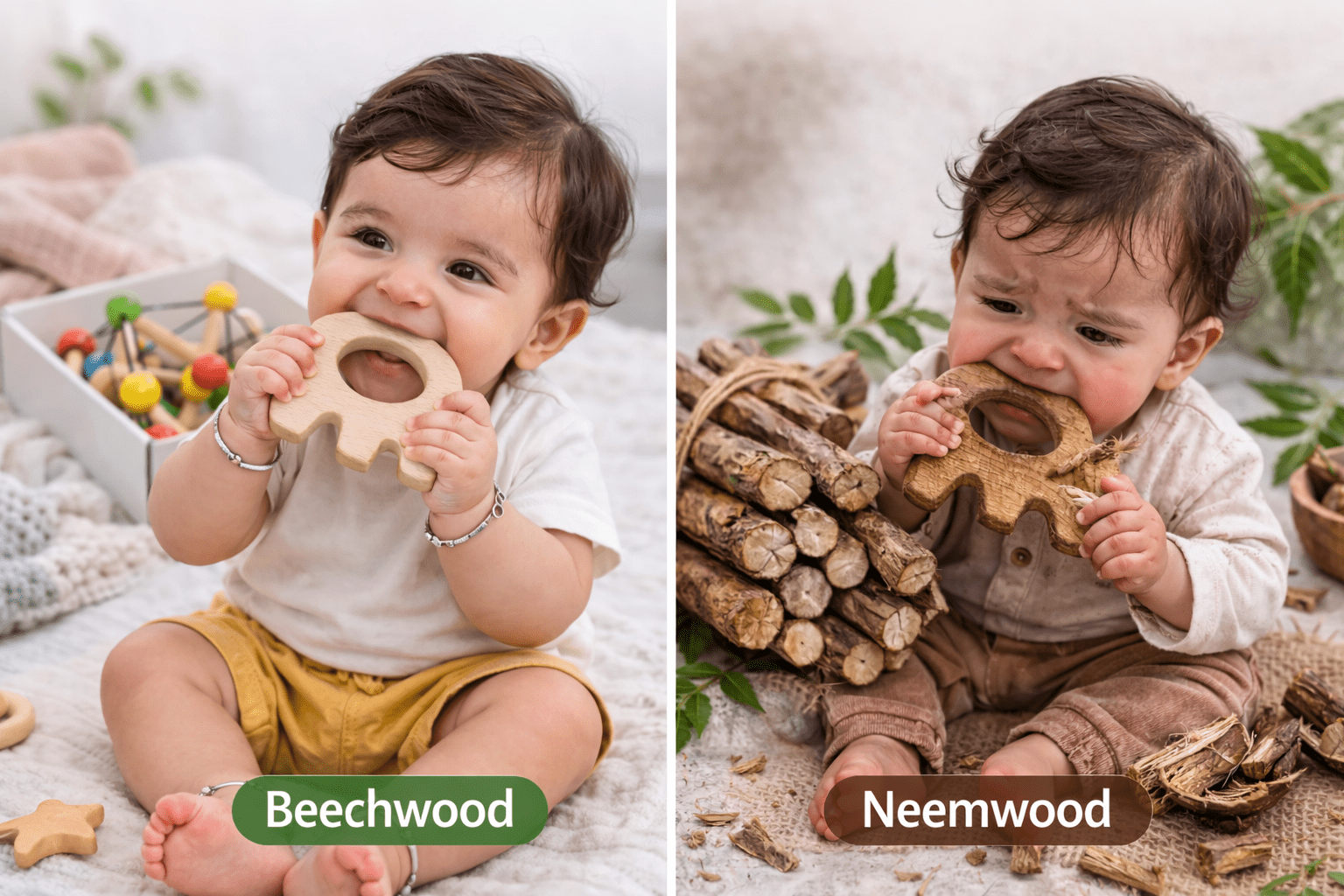
Neem wood has a special place in Indian homes. For generations, adults have used neem sticks to clean their gums and teeth. Its antibacterial properties are well known, and naturally, neem wood teethers became popular for babies too. When we began designing teethers, neem wood felt like the natural choice.
We tried. We experimented. We prototyped.
But very soon, we noticed something that worried us. No matter how much sanding or finishing we did, neem wood remained slightly rough for tiny hands and tender gums. And after repeated use, small splinters began to appear - something we could not overlook for a 2 to 5-month-old baby who puts everything in their mouth.
That was the moment we knew we had to reconsider.
Is Neem wood Safe for Babies Under 1 Year?
Neem wood is known for its antibacterial nature, which makes it appealing. However, safety for adults and safety for infants are very different standards.
During repeated use testing, we observed that neem wood’s grain structure can remain slightly coarse, even after polishing. Over time and constant chewing, minor fiber lifting may occur. For older children, this may not be critical. For infants in the early teething stage, it raises concerns.
When a product is meant to stay in a baby’s mouth daily, even small risks matter.

What Is the Safest Wood for Baby Teethers?
After extensive trials, we shifted our focus to Beechwood - a material used by almost all premium global baby brands.
The difference was clear.
- Beechwood is naturally smooth.
- It is dense and splinter-resistant.
- It has a uniform grain that allows even finishing.
- It can be perfectly rounded after polishing.
- It remains durable even with daily mouthing.
- It is non-toxic and naturally antibacterial when properly treated.
Every test, every prototype, and every real-use trial pointed to the same conclusion. For babies under 1 year, Beechwood is simply safer.
Beechwood vs Neem wood: Which Is Better for Baby Teething?
When comparing both materials specifically for infant teethers:
- Neem wood carries traditional familiarity but may retain slight roughness.
- Beechwood offers a smoother, more consistent finish.
- Neemwood may show surface changes over time with repeated chewing.
- Beechwood maintains structural stability for longer periods.
- Even though neem wood teethers sell more in India, the decision had to be based on safety performance, not popularity.
Beechwood proved to be gentler, safer, and more reliable for a baby’s first chewing experiences.
Why Does Material Choice Matter So Much for Teethers?
A baby teether may look small and simple, but it stays in your child’s mouth for months. It is gripped tightly, chewed daily, dropped, cleaned, and reused. What looks like a tiny wooden ring carries 4 to 5 months of research, sanding trials, finishing refinements, durability testing, and baby-safe evaluations behind it.
Material is not just a detail. It is the foundation of safety. Choosing a safe wooden teether for your baby is about looking beyond tradition and focusing on performance, smoothness, and long-term reliability.
About the Author
Neha Makdey is the Co-Founder & CEO of NESTA TOYS - India’s homegrown educational toy brand loved by over 1 lakh curious kids. NESTA Toys designs research-backed, hands-on learning toys for children aged 1–10, available on Amazon, Blinkit, Swiggy Instamart, and nestatoys.in. Follow NESTA TOYS on WhatsApp and Pinterest for free parenting resources and activity ideas.


