

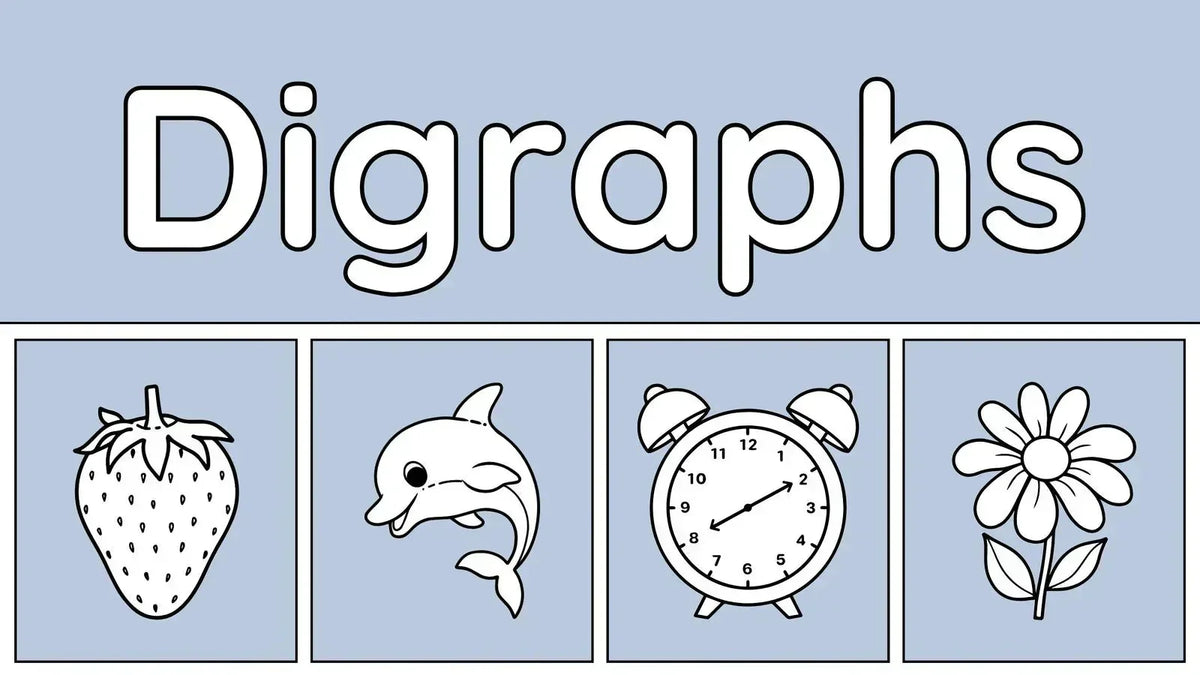
When children begin learning to read, they often discover that some letter pairs create a single sound—these are called digraphs. Digraphs can appear at the beginning or end of a word and are important building blocks for reading and spelling. For example, “sh” in ship or “ck” in duck represents one sound made by two letters. Recognizing these digraphs helps children decode words more easily, read with greater fluency, and spell with confidence. With regular exposure and practice, young readers quickly grow familiar with common beginning and ending digraphs, boosting their overall reading skills.
Understanding beginning and ending digraphs helps kids break down words, improve pronunciation, and read with more confidence. By practicing these common sound pairs, your child will build strong phonics skills and start reading words with ease. Keep this guide handy and encourage fun word games, flashcards, or reading activities to reinforce each sound pattern!
Join Our WhatsApp Channel to keep your child Screen-free - Activity Sheets, STEM Experiments, Phonics and many more..... - Join Now
Beginning Digraphs (Start of Words)
These digraphs appear at the beginning of words and make a single blended sound:
|
Digraph |
Sound |
Examples |
|
ch- |
/ch/ |
chat, chin, chop, chip, check |
|
sh- |
/sh/ |
ship, shop, shut, shell, sheep |
|
th- |
/th/ (voiced/unvoiced) |
this, that, thin, thick, them |
|
wh- |
/wh/ or /w/ |
what, when, whip, wheel, whiz |
|
ph- |
/f/ |
phone, photo, phase, phantom |
|
kn- |
/n/ (silent k) |
knife, knot, know, knee |
|
wr- |
/r/ (silent w) |
write, wrist, wrong, wrap |
|
gn- |
/n/ (silent g) |
gnat, gnaw, gnash |

Ending Digraphs (End of Words)
These digraphs appear at the end of words and also create a single sound:
|
Digraph |
Sound |
Examples |
|
-ch |
/ch/ |
much, rich, lunch, catch, bench |
|
-sh |
/sh/ |
wish, fish, dish, brush, crash |
|
-th |
/th/ |
math, path, moth, both, tooth |
|
-ck |
/k/ |
back, duck, lock, pick, rock |
|
-ng |
/ŋ/ (nasal sound) |
ring, song, long, bang, king |
|
-ph |
/f/ |
graph, triumph, morph |
|
-gh |
/f/ or silent |
laugh, cough, rough, though, through |
✅ Note on Voiced vs Unvoiced “th”
Some "th" words sound soft (voiced), others sound harder (unvoiced):
- Voiced (/ð/): this, that, them, those
- Unvoiced (/θ/): thin, thick, path, math
Optional: Common Vowel Digraphs
These vowel pairs are also common and often taught as digraphs:
|
Vowel Digraph |
Examples |
|
ai |
rain, train, paid, wait |
|
ee |
tree, sleep, sheep, green |
|
oa |
boat, toad, float, road |
|
ie |
pie, tie, chief, field |
|
oo |
moon, food, book, good |
|
ea |
leaf, team, bread, head |
Looking for a simple way to practice digraphs like ch, sh, or th?
📘 Try our Phonics Flashcards – Learn to Read in 20 Stages to build strong sound recognition skills.
👉 https://nestatoys.in/products/phonics-flash-cards-learn-to-read-in-20-stages
About the Author
Neha Makdey is the Founder and CEO of NESTA TOYS, an Indian educational toy brand trusted by 3 lakh+ families. NESTA TOYS designs hands-on learning toys for children aged 0–14, available on Amazon, Blinkit, Swiggy Instamart and nestatoys.in. Follow NESTA TOYS on WhatsApp and Pinterest for free parenting resources and activity ideas.


