

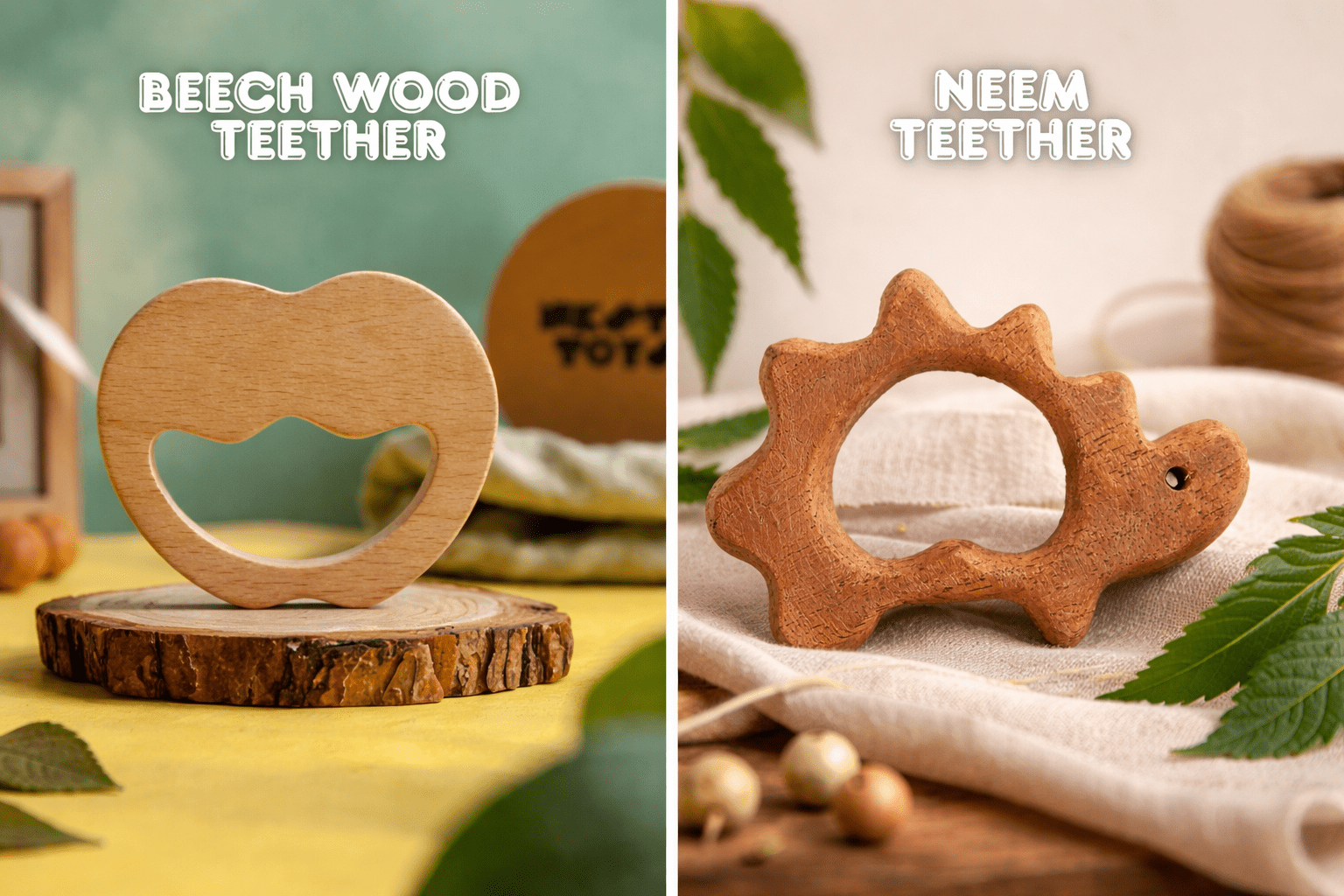
When your baby starts teething, the midnight crying, the endless drooling, and the constant fussiness can leave any parent desperate for a solution. A good teether makes a real difference but with so many options on the market, choosing the right one feels overwhelming. Two names that keep coming up are beech wood and neem wood teethers. Both are natural, both are wooden, and both have their loyal fans. But are they really equal? At NESTA TOYS, we've spent a lot of time thinking about this and we believe the answer matters more than most parents realize.
What Is a Wooden Teether and Why Do Pediatricians Recommend It?
Pediatricians often recommend wooden teethers over plastic or silicone alternatives because they are:
- Free from BPA, PVC, phthalates, and synthetic chemicals
- Firm enough to counter gum pressure without damaging soft tissue
- Natural, non-toxic, and safe for babies in their most orally active phase
- Long-lasting when made from quality hardwood like beech
Understanding the Teething Timeline: When Does It Start?
- Teething typically begins between 4 and 7 months
- Lower front teeth arrive first, followed by upper front teeth, then molars
- The full teething process can continue until age 2 to 3
- Signs to watch for: drooling, irritability, swollen gums, reduced appetite, urge to chew everything
A safe, hygienic, durable teether becomes one of the most used items in your baby toolkit during this entire window - so choosing the right material from day one matters.
Beech Wood Teethers: Why NESTA TOYS Chooses Beech?
At NESTA TOYS, all our wooden teethers are crafted from premium beech wood. Here's exactly why:
Durability
- One of the densest hardwoods available
- Holds up to aggressive, continuous chewing without splintering or cracking
- Outlasts softer wood alternatives significantly

Texture and Finish
- Naturally smooth, fine grain that is gentle on delicate gums
- Sanded to a fine finish at NESTA TOYS - no rough edges, no splinter risk
- Left uncoated or finished only with baby-safe, non-toxic materials
Taste
- Completely neutral - no flavour, no smell
- Babies accept it easily and quickly, even on first use
- Ideal for taste-sensitive babies, which is most babies
Safety and Certification
- Non-toxic and chemical-free throughout
- All NESTA TOYS beech wood teethers are BIS and ASTM certified
- Third-party verified - not just a brand claim
Sustainability
- Sourced from responsibly managed European forests
- A well-regulated, renewable wood supply chain
Neem Wood Teethers: Traditional Appeal With Real Limitations
Neem has deep roots in Ayurvedic tradition and its general health properties are well known. As a teether material, here's an honest look:
What neem wood does well:
- Naturally antibacterial - resists surface bacteria without chemical treatment
- Mild anti-inflammatory properties that may soothe irritated gums
- Fast-growing tree, making it a renewable resource
- Strong cultural familiarity, especially in Indian households
Where neem wood falls short:
- Noticeably bitter taste - many babies reject it outright, especially initially
- Softer than beech - shows wear faster with aggressive chewing
- Scientific research specifically on neem wood teethers is limited
- Inconsistent quality standards across available products in the market
Beech Wood vs. Neem Wood: Full Comparison Table
| Feature | Beech Wood | Neem Wood |
|---|---|---|
| Hardness | Very hard, ideal for teething | Moderately hard |
| Texture | Ultra-smooth, splinter-resistant | Slightly coarser grain |
| Taste | Neutral, babies accept instantly | Bitter, many babies reject initially |
| Durability | Excellent, outlasts most alternatives | Wears faster with aggressive chewing |
| Baby acceptance | High, works from first use | Moderate, needs adjustment time |
| Safety certification | BIS & ASTM certified | Varies by brand |
| Scientific backing | Globally well-researched | Limited teether-specific studies |
| Splinter risk | Minimal, fine sanded finish | Higher if not finished properly |
| Consistency of quality | Standardised, regulated | Inconsistent across market |
| Sustainability | Responsibly managed forests | Renewable but less regulated |
| Recommended by | Paediatricians globally | Traditional/Ayurvedic practice |
| Overall verdict | ✓ Safer, stronger, better accepted |
Second choice |

How to Care for a Wooden Teether?
Proper care keeps any wooden teether hygienic and extends its life:
- Wash with warm, soapy water before and after every use
- Never soak in water or put in a dishwasher - wood will crack and warp
- Sterilise only as per the manufacturer's specific instructions
- Air dry completely before storing
- Store in a clean, dry place
- Inspect regularly for cracks, splinters, or wear
- Discard immediately if any damage is found
Frequently Asked Questions About Wooden Baby Teethers
1. Are wooden teethers safe for newborns?
Wooden teethers are recommended from around 3 to 4 months onward, once teething signs appear. Always choose a size-appropriate teether from a certified brand and never leave your baby unsupervised while using one.
2. Is beech wood safe for babies to chew on?
Yes. Beech wood is non-toxic, splinter-resistant, and one of the most globally trusted materials in baby products. NESTA TOYS beech wood teethers are BIS and ASTM certified for complete peace of mind.
3. How do I sterilise a wooden teether?
Avoid boiling or steam sterilising extreme heat and moisture damage wood. Wipe with a damp cloth and mild soap, rinse quickly, and air dry fully. Follow the care instructions included with your teether.
4. At what age should I introduce a teether?
Most babies are ready between 4 and 6 months when teething symptoms begin. Watch for increased drooling, gum sensitivity, and the urge to chew as your cues. Some babies show signs as early as 3 months.
5. What is the best natural teether for babies in India?
Beech wood teethers are among the most trusted natural options in India - durable, safety-certified, and universally accepted by babies due to their neutral taste. NESTA TOYS offers certified beech wood teethers made from sustainably sourced wood, designed with Indian parents' safety expectations in mind.
Conclusion
Choosing a teether is one of those small decisions that actually matters more than it looks. Your baby will chew on it dozens of times a day, every single day, through one of the most sensitive phases of their development. That deserves more thought than just picking whatever is available.
Neem wood has its roots in tradition, and we respect that. But when it comes to verified safety, proven durability, smooth finish, and a taste that babies actually accept - beech wood wins every time. That is exactly why at NESTA TOYS, we don't offer both and leave you guessing. We made the choice for you, backed it with BIS and ASTM certification, and put it in every single teether we make.
Your baby deserves a teether that is safe from the first chew to the last. That is the NESTA TOYS promise.
About the Author
Neha Makdey is the Co-Founder & CEO of NESTA TOYS - India’s homegrown educational toy brand loved by over 1 lakh curious kids. NESTA Toys designs research-backed, hands-on learning toys for children aged 1–10, available on Amazon, Blinkit, Swiggy Instamart, and nestatoys.in. Follow NESTA TOYS on WhatsApp and Pinterest for free parenting resources and activity ideas.


