
Montessori Fundamental Needs Food Lesson: Materials and Step-by-Step Presentation
Materials Needed for the Montessori Lesson
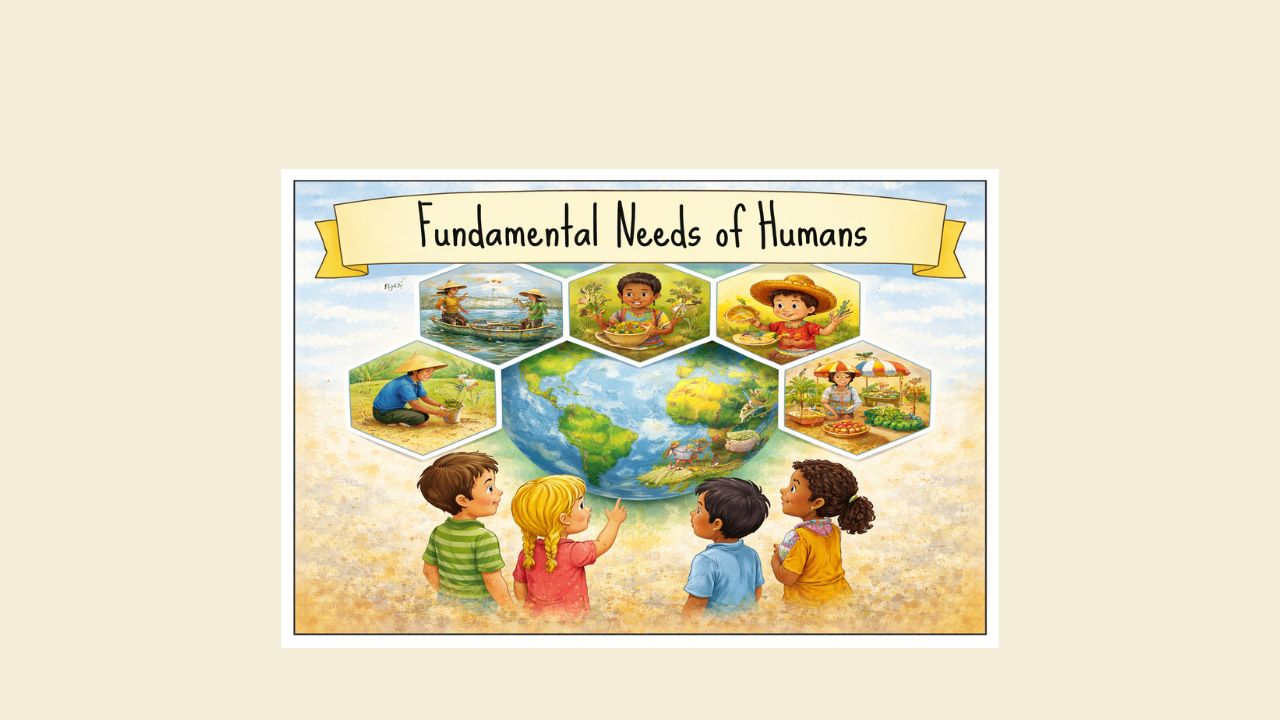
- Fundamental Needs Chart 2 (Food)
- Pictures or models of different foods
- Images of food sources such as farms, markets, gardens, and oceans
Step-by-Step Montessori Presentation
1. Introduction to Basic Human Needs
- Begin by discussing the idea of basic human needs with the children.
- Explain that all humans need certain things to survive, and one of the most important needs is food. Food helps our bodies grow, gives us energy, and keeps us healthy.
- Children quickly understand that without food, life cannot continue.
2. Exploring the Montessori Fundamental Needs Chart
Present the Fundamental Needs Chart (Food) to the children.
Use the chart to show how people around the world find and prepare food. You may also use pictures or small models to demonstrate examples such as:
- Farming and growing crops
- Fishing and gathering food from oceans
- Cooking and preparing meals
- Eating traditions in different cultures
This helps children understand that although everyone needs food, the way people obtain and prepare food can vary greatly depending on culture and environment.
3. Montessori Discussion and Inquiry
Encourage children to share what they already know about food.
You may ask open-ended questions such as:
- Why do people in different parts of the world eat different foods?
- How does the environment affect the food people grow or eat?
- What foods are common in our culture?
These conversations encourage critical thinking and curiosity, which are essential elements of the Montessori approach.
4. Montessori Research and Sharing Activity
- Invite children to explore a specific food or cultural cuisine.
- They can research where the food comes from, how it is grown, and how it is traditionally prepared. Afterward, they can share their findings with the group.
- This activity encourages independent research, communication, and cultural awareness.
What Are The Academic Applications of the Montessori Food Chart
The Montessori Fundamental Needs Food Chart connects learning across many academic subjects.
- Geography: Children learn how climate, land, and geography influence food production around the world.
- History: Students discover how agriculture and food systems developed throughout history.
- Cultural Studies: The lesson introduces children to global food traditions and cultural diversity.
- Science: Children explore the nutritional value of foods and understand how nutrients help the human body grow and function.
What Practical Life Skills Do Children Learn Through Montessori Food Activities?
The study of food also connects strongly with Montessori practical life activities.
- Cooking: Children can learn basic cooking skills and try simple recipes from different cultures.
- Gardening: Growing herbs or vegetables helps children understand where food comes from and the effort required to produce it.
- Critical Thinking: Children begin to think about healthy food choices and how food affects both their bodies and the environment.
What Montessori Food Activities Can Children Do at Home?
Parents can extend this learning at home with simple activities.
Cooking Together
- Activity: Choose a recipe from another culture and prepare it together as a family.
- Objective: Experience new foods and learn about different culinary traditions.
Food Journal
- Activity: Keep a journal of the foods eaten over a week and note where they come from.
- Objective: Encourage awareness of food diversity and cultural connections.
Visit a Farm or Local Market
- Activity: Visit a farm or a local farmer’s market.
- Objective: Help children see how food is grown, harvested, and sold.
Plant a Small Garden
- Activity: Grow herbs, vegetables, or fruits at home.
- Objective: Learn about plant growth, responsibility, and sustainable food production.
Cultural Meal Night
- Activity: Choose a country and prepare foods from that culture for dinner.
- Objective: Develop an appreciation for global cultures and food traditions.
Why Fundamental Human Needs Are Important in Montessori Learning
The Montessori Fundamental Needs Chart : Food helps children understand that food is a universal human necessity. It also shows how geography, culture, and environment shape the ways people meet this need.
Through this exploration, children develop:
- Cultural awareness
- Respect for global diversity
- Understanding of food systems
- Curiosity about the world
These lessons help children build a deeper understanding of human life and interconnected societies.