

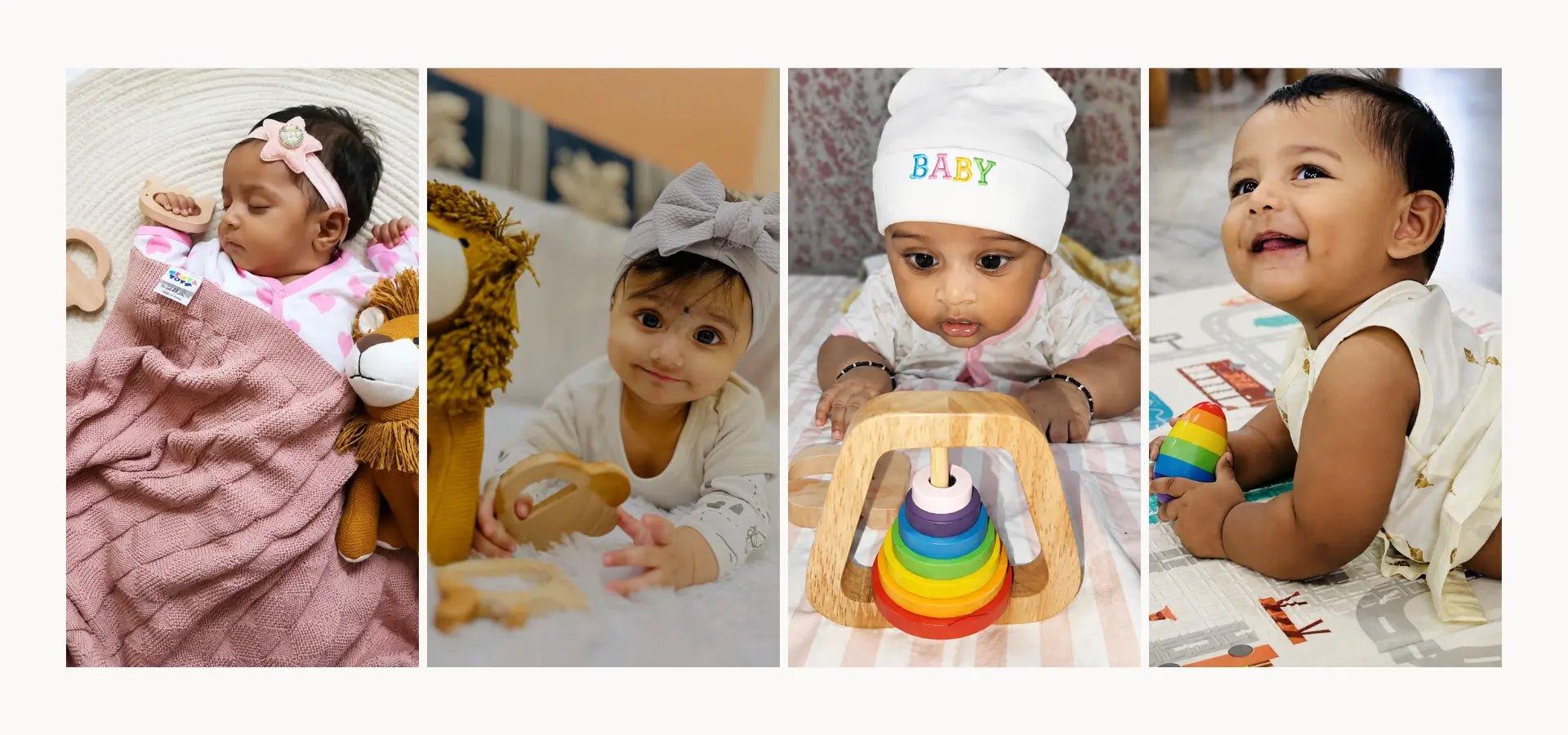
There's a moment a lot of parents remember clearly. A newborn, just hours old, turns toward a voice. Not any voice. Yours. It looks like instinct. It's actually memory, built over nine months of hearing you talk, laugh, and hum without either of you realizing it counted.
That's really what this article is about. Development doesn't start on the day your baby is born. It's already underway, quietly, long before that, and it keeps building through birth, through the first cuddle, through every ordinary conversation you have with a baby who can't yet answer back.
It starts before your baby is even born
By the third trimester, a baby's hearing is developed enough to pick up sounds from outside the womb, muffled, but there.
- Your voice becomes one of the most familiar sounds your baby knows before birth
- Studies have shown newborns respond differently to their mother's voice compared to an unfamiliar one, often turning toward it
- How you're doing matters too. A calmer, more supported pregnancy tends to create a steadier environment for baby
- None of this needs to be perfect. Talking, singing, even just going about your day is already doing the work
It's worth being careful here. The science on prenatal bonding is real but still evolving, so think of this stage as laying groundwork, not running a program.
Birth is a beginning, not a reset
Something interesting happens right after birth. Babies often calm down faster around a voice or heartbeat rhythm they already recognize.
- Skin to skin contact in the first hours helps regulate a newborn's heart rate, temperature, and stress levels
- Many babies turn toward a parent's voice within minutes of being born, recognizing something familiar in an unfamiliar world
- Early bonding doesn't require a specific ritual or a perfect first hour, it's the beginning of a relationship, not a single checkbox
- If your birth didn't go the way you planned, a C-section, time in the NICU, a rough start, bonding still happens. It just may look different, and that's fine
Long before words, babies learn through relationship
Before your baby understands a single word, they're already learning something bigger: whether the world responds to them.
- Eye contact tells a baby they're being seen
- A smile back, even a tired, half-awake one, teaches trust
- Touch, holding, rocking, a hand on the back, regulates a baby's nervous system in ways words can't yet
- Consistency matters more than intensity here, a baby doesn't need constant interaction, just reliable interaction
This is the part of development that happens almost invisibly. No one photographs "responded calmly to crying at 2am," but it's doing real work.
How bonding quietly turns into play
Here's where the story actually connects. Play doesn't appear out of nowhere around three or four months. It grows directly out of everything above.
- A baby who's used to a parent responding starts expecting a response, and starts testing it, that's the beginning of "serve and return" play
- Curiosity shows up once a baby feels secure enough to look away from you and explore something else, a toy, their own hand, a sound
- Exploration is really an extension of trust. A baby who feels safe is more willing to reach, grab, and investigate
- What looks like "just playing" by six months is often the direct continuation of the eye contact and responsiveness from month one
What this actually looks like, day to day
None of this requires a plan. Most parents are already doing it without labeling it.
-
Talking during feeds. Even a one-sided conversation gives a baby language patterns and the comfort of your voice.
-
Singing during bath time. The repetition is soothing, and many babies start recognizing specific songs within weeks.
-
Reading simple books. Naming pictures out loud matters more than finishing a story at this age.
-
Responding to babbling. Answering back, even nonsense syllables, reinforces the back and forth that becomes conversation later.
-
Walks outdoors. New sounds and sights give a baby something to take in beyond the four walls of home.
-
Naming everyday objects. "This is a spoon" while cooking does more than it seems to.
- Gentle routines. Predictability, the same bedtime steps, the same morning greeting, helps a baby feel secure enough to explore.
Myths that add pressure parents don't need
A few ideas tend to circulate that make new parents feel behind before they've even started.
- "Learning starts after birth." It starts earlier, and slowly, through sound and connection, not through anything structured.
- "Babies need constant stimulation." Quiet, calm stretches matter just as much. A baby staring at the ceiling is processing, not missing out.
- "Bonding has to happen perfectly and immediately." It's a relationship that builds over weeks and months, not a single moment you either get right or don't.
- "You need expensive products for any of this to work." Voice, touch, and attention are doing almost all of the actual work.
- "Every baby develops on the same timeline." There's a wide range of normal, and comparing babies rarely helps anyone.
Where toys fit into this story
Toys show up later in this story than most people expect, and that's fine. Once a baby is exploring and reaching, a simple, age-appropriate toy can give them something new to investigate, textures, sounds, shapes. It's an extension of the curiosity that bonding already built, not the source of it.
When to loop in your pediatrician
Every baby's story unfolds a little differently, and a wide range of that is completely normal. But if something about your baby's development is genuinely worrying you, movement, feeding, hearing, anything, your pediatrician can look at the full picture in a way no article ever really can.
Back to that first moment
That newborn turning toward a familiar voice wasn't really the beginning of anything. It was a baby recognizing something they'd already come to know. Everything after it, the first smile, the first held gaze, the first game of peekaboo, is a continuation of that same story. You don't need to engineer any of it. You just need to keep showing up, the way you probably already have been.
About the Expert Author
Dr. Neharika Malhotra is an Obstetrician, Gynecologist, and Infertility Specialist at Rainbow IVF, Agra, and a proud mother of two. Her work in women’s health extends beyond pregnancy and childbirth, with a special focus on preterm babies, early development, and giving every child the best possible start in life.
Through her clinical work, awareness initiatives, and academic contributions, she advocates for nurturing the physical, emotional, and developmental needs of children from their earliest years. As both a doctor and a mother, she believes that the first few years of a child’s life lay an important foundation for the person they become.
FAQs
Can my baby hear me while I'm pregnant?
Yes, by the third trimester a baby's hearing is developed enough to pick up sounds from outside the womb, including your voice, though muffled.
Does talking to my baby during pregnancy actually make a difference?
It's believed to help babies become familiar with their parent's voice before birth, which may explain why many newborns respond to a familiar voice soon after being born.
When does a baby's brain development really begin?
Development begins well before birth and continues through pregnancy, birth, bonding, and everyday interaction, it's a continuous process rather than something that starts at a specific moment.
Why is skin to skin contact important after birth?
It helps regulate a newborn's heart rate, temperature, and stress levels, and supports early bonding between parent and baby.
How does bonding turn into play as my baby grows?
As a baby feels secure through consistent, responsive caregiving, they become more willing to explore their surroundings, which naturally develops into play-based learning.
Do I need to worry if I didn't get much skin to skin time right after birth?
No. Bonding continues to develop over time through everyday interaction, it isn't limited to the first hour after birth.
When should I talk to my pediatrician about my baby's development?
If you have specific concerns about your baby's development, whether related to movement, hearing, feeding, or anything else, it's always worth discussing with your pediatrician.


