

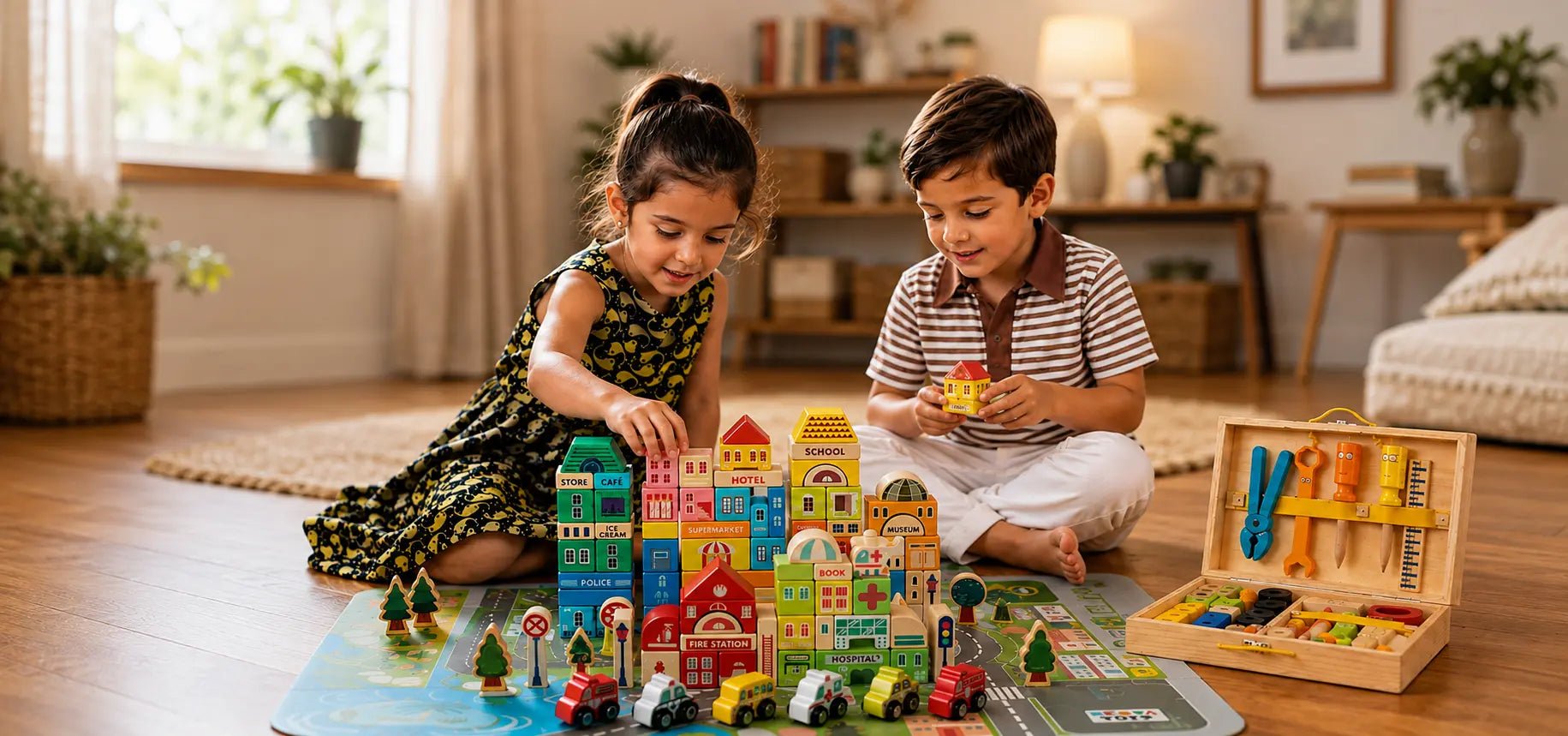
A mother told me once that she couldn't remember a single toy her son had asked for on his fourth birthday, but she remembered exactly what she was wearing that day, and what he wore, and where the light was coming through the window when he opened his presents. I've heard some version of this story from a lot of parents over the years. Ask someone about their childhood and you rarely get a list of things. You get a scene.
Somewhere in that scene, though, there's usually an object. A stuffed rabbit with one ear chewed off. A dress that got handed down to a cousin two summers later. The object isn't the memory itself, but it sits inside it, almost like furniture in a room you're picturing. Understanding how that happens, how something as ordinary as a toy or a sweater ends up lodged in a memory, is worth a closer look if you're raising a child right now.
What Makes Something an Heirloom?
People assume heirlooms are expensive, or old, or locked away somewhere safe. Most of the ones I've come across started out as nothing special at all. A grandmother's cardigan isn't valuable because of the wool. It's valuable because she wore it every Diwali for twenty years, and everyone in the family has a photo of her in it. A wooden toy truck with scratched paint isn't rare. It just happens to be the one three siblings pushed across the same kitchen floor, one after another.
What actually turns an object into an heirloom has less to do with the object and more to do with use. Things get worn in, not worn out. A chipped corner or a faded seam usually adds to the story instead of ruining it, which is a strange thing to say about a possession, but true anyway.
None of this is really about nostalgia. It's a practical point about what a family brings into a child's life in the first place. Something made to last one season won't get the chance to become anyone's memory. Something built with more care might.
Why Children Don't Need Endless Choices
Most playrooms I've seen are full of toys nobody touches anymore. Closets look similar, stuffed with clothes that lose their tags before the first wash. I don't think this is really a parenting failure. It's just what happens when there's too much of everything available all the time, which describes a lot of modern childhood, not just toy boxes.
There's a decent body of research on this, going back decades, showing that young children given fewer toys tend to play longer and more creatively with what they have. Give a child twenty toys and they'll likely sample most of them and finish none. Give the same child three or four, and something shifts. The blocks become a city one day and a spaceship the next.
Clothing follows a similar pattern, oddly enough. A closet crammed with fast-fashion basics rarely produces a favorite outfit, the one a kid fights you to wear every single day. A smaller, more considered wardrobe usually does produce that piece, and it's often the one showing up in every photo from that particular year.
Cutting down on quantity has nothing to do with deprivation. If anything, it gives a child more room, mentally, to actually attach to what they already own.
The Toys That Stay With Us
Not every toy makes the cut, memory-wise. The ones that do usually have one thing in common: they don't come with instructions on how to play. A wooden block can be a tower one minute and a phone the next, or a boat, or a slice of pretend cake, depending entirely on what the kid holding it decides. A toy that only does one thing, no matter how flashy the packaging, usually gets shelved once the novelty wears off, sometimes within a week.
This is roughly the logic behind Montessori-style play, an approach developed by the physician and educator Maria Montessori more than a century ago. The idea is to hand children real, purposeful materials instead of gimmicks, then get out of the way. Wooden blocks, simple pretend kitchens, basic building sets, these hold a child's attention for years rather than months, mostly because they grow with the child's imagination instead of running out of tricks.
NESTA TOYS is one brand leaning into this directly, handcrafting Montessori-inspired wooden toys in small batches with local Indian artisans, built for screen-free play that works whether a child is three or seven. It's a small example, but it shows how an early design decision can decide whether a toy survives childhood or ends up in a donation pile within a month.
The Clothes We Remember
Clothes hold onto memory differently than toys do. Nobody's sentimental about a school uniform, but almost every family I know has at least one outfit tucked into a drawer somewhere for reasons that have nothing to do with the fabric itself. The dress from a cousin's wedding. The sweater a grandfather brought back from a work trip. The kurta from a first Diwali photo, the one where the toddler in question refused to sit still for even one shot.
What connects these pieces is timing and durability, oddly paired together. They were worn during something that mattered, and they happened to survive the washing, the outgrowing, the general chaos of being worn by a small child, without falling apart along the way. Fast fashion rarely produces this kind of keepsake, mostly because it isn't built to last past a season, let alone long enough to reach a second child in the family.
The Orikai is trying to fill exactly this gap. The label was founded by sisters Yashvi and Harvi Mehta, who grew up in a family with three generations in the textile trade before starting the brand themselves. Their pieces are built to outlast a single season and get passed down between siblings or cousins, which is why they call their own designs "little heirlooms," a description that does most of the explaining on its own.
Creating an Heirloom Childhood
None of this calls for overhauling how a family shops or plays overnight. Small, repeated choices matter more than one dramatic clear-out of the toy box, in my experience. A few things worth trying:
- Buy less, but choose better. A single well-made toy tends to outlast three cheap ones, both in how long it physically holds together and in how much a kid actually cares about it.
- Rotate toys instead of keeping everything out at once. Something that's been out of sight for a few weeks often comes back with all its appeal restored, no purchase required.
- Hang onto at least one outfit from each big milestone, even knowing it'll never be worn again. Keeping it has less to do with reuse than with the story that eventually gets attached to it.
- Let kids return to the same handful of toys over and over instead of constantly introducing something new. A lot of real learning happens in that repetition, even when it looks like nothing much is going on.
- Tie specific traditions to specific things, a particular sweater that comes out every Diwali, the same set of blocks that appears every monsoon.
- Choose quality over whatever's trending, especially for anything a child wears or handles daily. Trends are gone within a year. Good stitching or good joinery sticks around a lot longer.
None of it requires spending more money, just a little more thought about what earns a spot in a child's world.
Kids rarely grow up remembering how many toys sat on their shelves or how many outfits filled a drawer. What tends to stick is one block set from one rainy afternoon, or a dress worn to a wedding a person can still describe forty years later. The objects were never really the point. They just happened to be sturdy enough, and present enough, to end up woven into the story.
About the Authors:
This piece was created as a content collaboration between NESTA TOYS and The Orikai. Written for NESTA TOYS by Neha Makdey, Co-Founder & CEO, an IIM Trichy alumna who builds handcrafted, Montessori-inspired educational toys with local Indian artisans. Contributed to in partnership with Yashvi and Harvi Mehta, Co-Founders of The Orikai, sisters building timeless, heirloom-quality kidswear rooted in three generations of family textile experience.
FAQs
1. What makes a toy or piece of clothing become a childhood heirloom?
Repetition and attachment, not price. Items become heirlooms when they're used often, made well enough to survive that use, and present during moments a family remembers.
2. Why do children play better with fewer toys?
Research on child development suggests too many options can overwhelm young children. With fewer toys, children tend to engage more deeply and invent more varied ways to play with what they have.
3. What is open-ended play?
Open-ended play involves toys without a single fixed use, like wooden blocks, that a child can turn into many different things depending on their imagination that day.
4. What is Montessori-inspired play?
It's an approach, developed by physician and educator Maria Montessori, that favors real, purposeful materials over gimmicky toys, trusting children to explore and learn at their own pace.
5. How can parents reduce toy clutter without upsetting their child?
Rotating toys instead of removing them permanently works well. Toys set aside for a few weeks often get rediscovered with fresh interest when brought back out.
6. Why do certain outfits become family keepsakes?
Usually because they were worn during a meaningful moment and made well enough to survive being worn, washed, and outgrown without falling apart.
7. Does buying fewer, better-quality toys and clothes cost more?
Not necessarily. It's less about spending more and more about being selective, since one well-made item often replaces several short-lived ones over time.
8. What age group benefits most from open-ended, Montessori-style toys?
These toys tend to work well across a wide age range, often from toddlerhood through early school years, since the same toy can be used differently as a child's skills grow.
9. How can families start building an "heirloom childhood" today?
Small steps work best: save one outfit per milestone, rotate toys instead of accumulating them, and choose a few well-made items over many disposable ones.


