

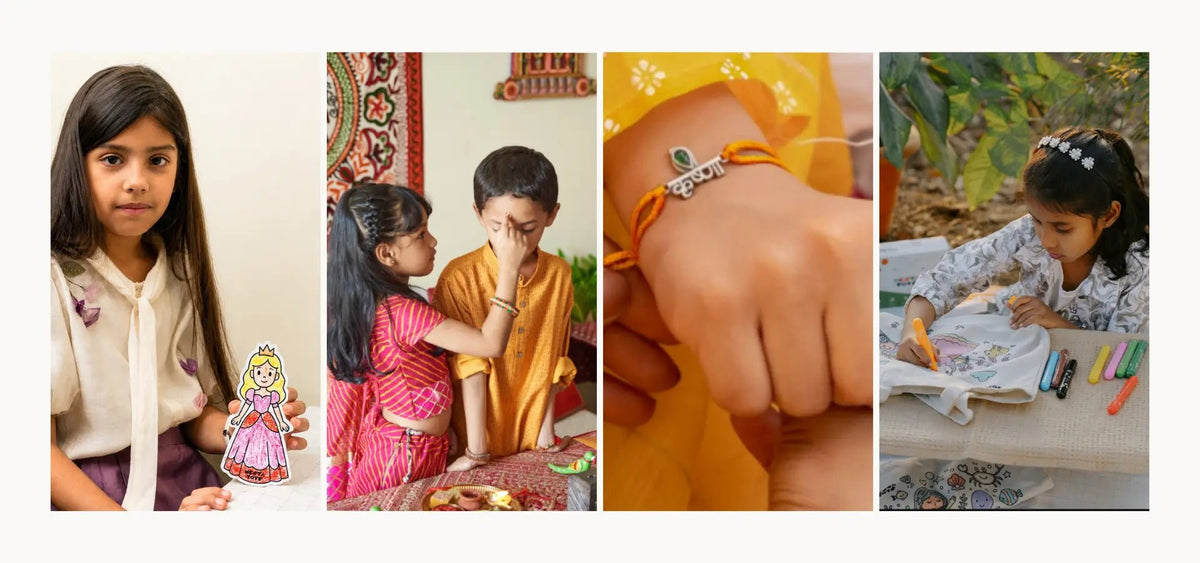
For a lot of kids, Raksha Bandhan plays out in roughly four steps. Tie the Rakhi, eat something sweet, open a gift, pose for a photo. Then everyone scatters back to whatever they were doing before.
None of that is wrong, but there's room for a fifth step that often gets skipped, actually doing something together. Nothing elaborate. No special equipment, no hours of prep, nothing that needs a trip to the store first. Just something siblings can start in five minutes with what's already lying around the house.
Why a Shared Activity Actually Adds Something
Shared activities give siblings a reason to talk, cooperate, and work through small problems side by side, rather than existing in the same room without really interacting. That's really it, no bigger claim needed.
It's worth being careful here rather than overselling it. One craft project isn't going to transform how two siblings get along. What it can do is give them a genuine reason to spend focused time together, and that tends to become part of what they actually remember about the day, more than the Rakhi itself often does.
Shared participation matters more than equal participation.
An activity works better when both children have a meaningful role, not when they're doing identical tasks. A five-year-old and a ten-year-old can both genuinely contribute to the same activity, just differently.
10 Raksha Bandhan Activities for Kids
1. Make a Rakhi Together
Give siblings paper, thread, and a few age-appropriate beads or decorative bits, and let them put together a simple handmade Rakhi or card. Younger children need supervision around small pieces, but even a toddler can help choose colors while an older sibling handles the threading. Works well for most ages with the right supervision. If you'd rather skip gathering materials yourself, a guided kit like the DIY Dream Catcher Mandala Art Kit works as a similar structured craft siblings can build side by side.
2. Make a Sibling Memory Card
Each child makes a small card for the other, a favorite shared memory, something they appreciate about their sibling, or just a funny moment from recently. Younger kids draw it, older kids can write a line or two. No craft supplies beyond paper and something to draw with, though something like the DIY Doodle Bag Set (Princess & Mermaid Themes) comes as a pair, one bag each, which works nicely if you want siblings each decorating their own piece side by side rather than sharing supplies.
3. Build Something Together
Pick a challenge, a house, a bridge, a fort, something neither of them has built before, and hand over a set of building blocks. The point isn't the finished structure, it's the back and forth of deciding what to build and how. Our guide to building and construction play goes deeper into why this kind of play works, if you want more on that side of it. For this activity, the takeaway is simpler, one shared result, built by two kids negotiating along the way.
4. Sibling Pretend-Play Challenge
Set up a quick restaurant, shop, or café using pretend-play pieces or safe household objects, and let siblings swap roles, customer, shopkeeper, chef. Our guide to pretend play through kitchen toys has more on why this kind of play holds up so well over time. Here, the main thing is just letting the story run without directing it.
5. Puzzle Team Challenge
Choose one puzzle that suits the younger sibling's ability, then work on it together, no racing, no one finishing it solo. The older child can hand pieces and offer hints without actually solving it for them. This one naturally levels the playing field between different ages.
6. Raksha Bandhan Treasure Hunt
Hide a few simple clues around the house leading to something small, a photo, a favorite toy, a handwritten note. Picture clues work for younger kids, short written riddles for older ones. Preparation takes about ten minutes and the payoff usually lasts much longer.
7. Sibling Storytelling Game
Start with "Once upon a Raksha Bandhan..." and take turns adding one sentence each until the story reaches some kind of ending. Younger children can contribute a single word or pick a character instead of a full sentence. Costs nothing, needs nothing, works almost anywhere.
8. Create Shared Artwork
One large sheet of paper, one drawing, made by both kids together rather than two separate pictures side by side. A family scene, an imaginary place, whatever they land on. The "shared" part is the whole point here, not the artistic result. A DIY fridge magnet kit is a decent structured alternative if you want something with a bit more built-in guidance and a keepsake result they can stick on the fridge afterward.
9. Cook or Pretend-Cook Together
Older kids might manage simple, adult-supervised food prep. Younger ones can run the same idea through pretend-play kitchen pieces instead. Either way, the activity is about doing something side by side, not about the end result being edible or impressive.
10. Sibling Challenge Jar
Write a handful of small activities on paper slips, build something together, tell a funny story, draw each other, find five things the same color, and drop them in a jar. Pick one at random when there's a spare ten minutes. This one has the advantage of outlasting Raksha Bandhan itself, it works just as well on an ordinary weekend months later.
| Activity | Best For | What You Need |
|---|---|---|
| Make a Rakhi together | All ages, with supervision | Paper, thread, beads |
| Sibling memory card | All ages | Paper, pens |
| Build something together | Preschool and up | Building blocks |
| Pretend-play challenge | Toddler and up | Pretend play pieces or household items |
| Puzzle team challenge | Preschool and up | One age-appropriate puzzle |
| Treasure hunt | All ages, clues adjusted | Paper for clues |
| Storytelling game | All ages | Nothing |
| Shared artwork | All ages | Large paper, drawing supplies |
| Cook or pretend-cook | Age-dependent, supervised | Kitchen or pretend kitchen items |
| Challenge jar | All ages | Paper slips, a jar |
Screen-Free Doesn't Have to Mean Complicated
None of the ten above need special equipment, a shopping trip, or an afternoon of preparation. Building, drawing, pretend play, puzzles, storytelling, a shared craft, that's really the whole toolkit, and most of it's probably already in the house.
Worth being clear about something here too, screen-free activities aren't a cure for anything, and screens aren't the enemy. These ten just give kids another way to spend time together that doesn't involve a screen, one option among many, not a replacement for every other kind of play.
Matching Activities to Age, Loosely
Toddlers
Simple art, large-piece building, supervised pretend play, drawing alongside an older sibling. Keep materials large and supervision close.
Preschoolers
Storytelling, simple puzzles, building challenges, pretend play, treasure hunts with picture clues, shared artwork.
School-Age
More complex building, longer puzzles, written clues, elaborate role play, story games with real plot twists.
These are starting points, not rules. Some five-year-olds will happily sit through a twenty-minute puzzle. Others won't, and that's completely normal, not a sign anything's off.
Making It Work Across Different Ages
The trick with mismatched-age siblings isn't finding an activity both kids can do equally well. It's finding one where each kid has a role that actually fits them. A younger sibling can choose colors, pass pieces, or pick a character. An older sibling can read clues, handle trickier construction, or write part of a story. The older one shouldn't just do the whole thing while the younger one watches, that defeats the point of "together."
A few things that consistently help:
- Give the younger child a genuinely useful, not token, role
- Let the older child assist without taking over
- Pick activities with more than one level of difficulty built in
- Focus on cooperating, not winning
- Let kids pick their own roles where possible
- Break bigger activities into smaller pieces everyone can touch
An activity that's quick to start tends to beat an elaborate one on an actual festival day, when everyone's already busy with visitors, food, and half a dozen other things happening at once.
Before You Pick an Activity
☐ Can both children genuinely participate?
☐ Does it suit their ages, loosely?
☐ Does it need little to no prep?
☐ Is it safe for the youngest child involved?
☐ Can they actually do it together, not just near each other?
☐ Can it flex for different abilities?
☐ Does it naturally invite conversation?
☐ Does each child have something real to contribute?
☐ Will they actually enjoy it, or is it just easy to prepare?
What About the Rakhi Gift?
If you're also sorting out a gift alongside all this, our guide to choosing Rakhi gifts for kids covers how to pick one based on age, interests, and play style. This piece is really about the day itself, not what goes in the wrapping paper.
Raksha Bandhan doesn't have to end at the gift and the photo. A ten-minute shared activity, built, drawn, solved, or made up on the spot, often ends up being the part that actually sticks. It costs nothing, needs almost no planning, and works just as well on any random Sunday afterward, which might honestly be the better use for half of these ideas anyway.
About the Author
Neha Makdey is the Co-Founder & CEO of NESTA TOYS - India’s homegrown educational toy brand loved by over 3 lakh curious kids. NESTA Toys designs research-backed, hands-on learning toys for children aged 1–10, available on Amazon, Blinkit, Swiggy Instamart, and nestatoys.in. Follow NESTA TOYS on WhatsApp and Pinterest for free parenting resources and activity ideas.
FAQs
What are some Raksha Bandhan activities for kids?
Simple options include making a Rakhi together, creating a sibling memory card, building something together, solving a puzzle as a team, creating shared artwork, storytelling, and setting up a small treasure hunt.
What games can siblings play on Rakhi?
A storytelling game, a puzzle team challenge, or a sibling challenge jar all work well, low prep, genuinely cooperative, and suited to more than one age at once.
How can I celebrate Raksha Bandhan with kids at home?
Beyond the Rakhi and gift exchange, a short shared activity, building, drawing, a treasure hunt, gives siblings a reason to actually spend time together rather than just posing for photos.
What are some screen-free Raksha Bandhan activities?
Building challenges, pretend play, puzzles, storytelling games, and shared artwork all work without screens and mostly use things already at home.
What activities can siblings of different ages do together?
Activities where each child has a distinct, meaningful role tend to work best, a puzzle where one picks pieces and the other places them, or a story where one child speaks and the other draws.
How can I make Raksha Bandhan more fun for children?
Adding one simple shared activity alongside the usual Rakhi and sweets often makes more of an impression than the gift itself, especially something quick enough to start without much planning.
What are easy Rakhi activities that don't need many materials?
Storytelling, a challenge jar, and shared artwork need almost nothing beyond paper and a bit of time, making them easy to pull together last minute.
Can building or creative activities be included in Raksha Bandhan celebrations?
Yes, building something together or creating shared artwork both work well as festival activities, giving siblings a concrete, shared project rather than separate, individual play.


